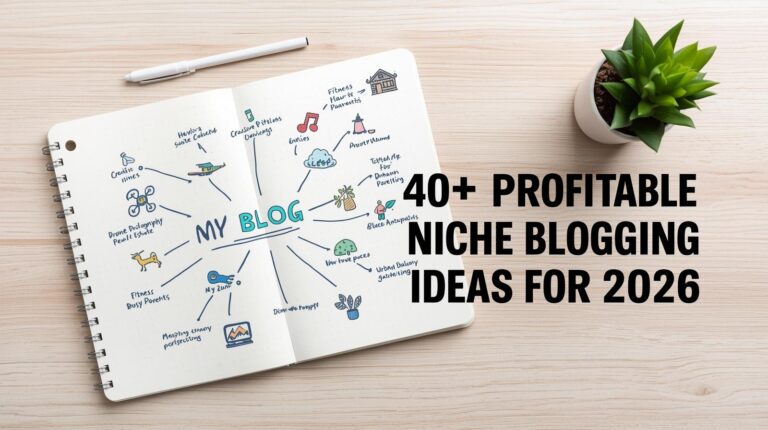

What Is a Niche Market? The Ultimate Guide to Finding Your Profitable Corner of the Internet
Discover why “going small” is the biggest key to success for modern entrepreneurs, bloggers, and online businesses.
Imagine you want to buy a pair of high-performance running shoes designed specifically for ultramarathon runners who have wide feet. Where would you rather shop? A giant superstore like Walmart that has a small, generic “running shoes” section, or a specialized store called “WideFoot Endurance Runners” that caters *exactly* to your specific need?
The choice is obvious. You’d go to the specialist. They understand your unique problems, they speak your language, they carry the exact products you’re looking for, and you trust their expertise. That specialized store, in a nutshell, is a niche business serving a niche market. And in the vast, noisy world of the internet, being that trusted specialist is your golden ticket to success.
The term “niche market” gets thrown around a lot, but what does it actually mean? And more importantly, how can you find one and turn it into a profitable venture? This guide will demystify the entire concept. We’ll cover the definition, the immense benefits of “niching down,” and a practical, step-by-step process for finding your own profitable corner of the internet.
What is a Niche Market? The Quick Answer
A **niche market** is a specific, focused, and well-defined segment of a larger market. Instead of trying to serve a broad audience with generic products or content (like “shoes”), a niche business focuses on a smaller group of people with a very particular set of needs, interests, or problems (like “ergonomic shoes for nurses who work 12-hour shifts”).
Part 1: Why Go Niche? The “Small Pond, Big Fish” Advantage
In a world dominated by giants like Amazon and Google, it might seem counterintuitive to intentionally target a smaller audience. Why would you want a smaller piece of the pie? Because in a smaller pond, you can be the big fish. Trying to compete with Walmart on price and selection is a losing game. But Walmart can’t compete with our “WideFoot Endurance Runners” store on expertise and specialization. The advantages of niching down are immense.
Advantage #1: Drastically Reduced Competition
The broader the market, the more ferocious the competition. The keyword “weight loss” is targeted by massive health corporations with multi-million dollar marketing budgets. It’s nearly impossible for a newcomer to compete. But what about “intermittent fasting for women over 50 with thyroid issues”? The competition thins out dramatically. You’re no longer fighting an army; you’re facing a handful of other specialists.
Advantage #2: A Hyper-Engaged and Loyal Audience
People in niche markets are often highly passionate and connected. Think of communities around specific hobbies (like miniature painting or sourdough baking) or shared identities (like digital nomads or parents of twins). When you create content or products specifically for them, they feel seen and understood. This fosters a deep sense of loyalty and community that broad, generic brands can only dream of.
Advantage #3: It’s Easier to Become an Authority (and Rank on Google)
When you focus all your energy on a narrow topic, you can become a genuine expert much faster. Google’s algorithms reward this. It’s a core component of effective SEO for niche websites. Google would rather send a user searching for “best dog food for a Dalmatian with skin allergies” to a website that is 100% focused on Dalmatian health than to a generic pet food site. By niching down, you signal to both users and search engines that you are the go-to authority on that specific subject.
Advantage #4: Higher Conversion Rates and Profitability
Because you’re speaking directly to a specific person with a specific problem, your marketing message is incredibly relevant. This leads to much higher conversion rates. A visitor to your site about “training rescue greyhounds” is far more likely to buy your recommended harness or sign up for your course than a random visitor to a generic “dog training” site. This is the secret behind many successful affiliate marketing niches; a targeted audience converts better.
“The riches are in the niches.” – A timeless marketing proverb.
Part 2: The Anatomy of a Great Niche – The 3-Prong Test
Not all niches are created equal. A great niche sits at the intersection of three crucial elements: Passion, Problems, and Profitability. Before you commit to a niche, you must be able to confidently check all three boxes.
Prong #1: The Passion/Interest Prong
Building a successful niche site or business is a marathon, not a sprint. You will be creating content, engaging with your audience, and living and breathing this topic for years. If you don’t have a genuine interest in the subject, you will burn out. Your lack of enthusiasm will be palpable to your audience, and your content will be shallow.
Ask yourself: Could I happily write 100 articles or create 50 videos about this topic without getting bored?
Prong #2: The Problem/Demand Prong
Passion isn’t enough. Your chosen audience must have pressing problems, burning questions, or strong desires that they are actively trying to solve. People don’t just search online for fun; they search for answers. Is your niche audience looking for recommendations, tutorials, solutions, or information?
How to check: Use keyword research tools to see if people are searching for terms related to your niche. Browse forums like Reddit or Quora. Are people asking questions? Are there active Facebook groups dedicated to this topic? A vibrant community is a strong sign of demand.
Prong #3: The Profitability Prong
Finally, your audience must be willing and able to spend money to solve their problems. A niche dedicated to “frugal living for college students” might be passionate and have problems, but the profitability potential is low. A niche about “golf equipment for seniors with back pain,” however, targets an audience with a proven willingness to spend money on their hobby and their health.
How to check: Are there products being sold in this niche (on Amazon, specialized e-commerce stores, etc.)? Are there affiliate programs available? Are other bloggers or businesses advertising? The presence of money being spent is the best validation of a niche’s profitability. A great place to start is by looking at profitable niche website examples to see what works.

Essential Reading: Create Your Own Market Space
“Blue Ocean Strategy” by W. Chan Kim and Renée Mauborgne is a groundbreaking book that perfectly encapsulates the power of niching. It argues that lasting success comes not from battling competitors in a “red ocean” of bloody competition, but from creating “blue oceans” of uncontested market space. This is the strategic mindset behind every successful niche business.
View on AmazonPart 3: Real-World Examples – The Art of “Niching Down”
To truly grasp the concept, let’s look at how you can take a broad, competitive market and drill down to find a profitable niche.
Example 1: The “Cooking” Market
- Broad Market (Impossible to compete): Cooking
- Niche: Baking
- Deeper Niche: Sourdough Baking
- Hyper-Niche: Gluten-Free Sourdough Baking for People with Celiac Disease
See the difference? A blog about “cooking” is doomed. A blog about “Gluten-Free Sourdough Baking” can become the number one resource in the world for that specific audience.
Example 2: The “Travel” Market
- Broad Market (Extremely competitive): Travel
- Niche: Budget Travel
- Deeper Niche: Backpacking in Southeast Asia
- Hyper-Niche: Solo Female Backpacking in Southeast Asia on Less Than $30 a Day
The hyper-niche site has a clearly defined audience with very specific needs and concerns. Every piece of content, from “best safety gear for solo female travelers” to “how to find cheap hostels in Vietnam,” is perfectly targeted.
Part 4: How to Find Your Own Niche – A Brainstorming Toolkit
Ready to find your own niche? Here’s a practical, step-by-step process you can use to generate and validate ideas.
Step 1: Start with Yourself
The best place to find ideas is in your own life. Get out a piece of paper and brainstorm answers to these questions:
- What are your hobbies and passions? (e.g., fishing, knitting, classic cars)
- What are you professionally skilled at? (e.g., project management, graphic design, nursing)
- What problems have you solved in your own life? (e.g., trained a difficult puppy, navigated a complex home-buying process)
- What do friends and family always ask you for advice about?
This initial list is your seed list of authentic, passion-driven ideas. If you need more inspiration, check out our list of niche blogging ideas.
Step 2: Explore Online Communities
Go where your potential audience hangs out. Spend a few hours exploring:
- Reddit: Find subreddits related to your interests. Look for “What are you struggling with?” or “What’s the best product for X?” threads. The language people use is a goldmine.
- Facebook Groups: Join groups around your hobbies. Pay attention to recurring questions and complaints.
- Quora and AnswerThePublic: These are platforms built entirely around questions. Search for your broad topic and see the hundreds of specific questions people are asking.
Step 3: Use Amazon as a Research Tool
Amazon is a treasure trove of niche data. Look at the best-seller lists in categories related to your interests. Pay close attention to non-fiction books and product categories. If people are consistently buying books and products about a topic, it’s a profitable niche.
Step 4: Perform Basic Keyword Research
Once you have a promising idea, it’s time for a quick validation check. Use a free keyword tool (like Google Keyword Planner or Ubersuggest’s free version) and look for two things:
- Search Volume: Are people actually searching for this? You don’t need hundreds of thousands of searches, but you want to see some activity.
- Keyword Difficulty: How competitive is it? Look for long-tail keywords (phrases of 3+ words) that have a lower difficulty score. This is a sign of a less saturated niche.
Step 5: Apply the 3-Prong Test
Take your best ideas and run them through the Passion/Problem/Profitability test we discussed earlier. The idea that scores highest across all three is your winner.
Part 5: Marketing to a Niche Audience
Once you’ve chosen your niche and built a website or product, your marketing strategy also needs to be niche. Generic advertising won’t work. The key is to be present where your audience is already congregating. Effective niche product marketing online is about targeted, value-driven engagement, not broad, expensive ad campaigns.
Conclusion: Your Unfair Advantage is Your Specificity
In the digital age, being a generalist is a path to obscurity. Your uniqueness, your specific knowledge, and your focused passion are your greatest competitive advantages. Don’t be afraid to go small. Don’t be afraid to exclude people. By focusing on a well-defined niche market, you’re not limiting your potential; you’re unleashing it. You’re giving yourself permission to become the go-to expert, the trusted resource, and the beloved brand for a community that is desperately searching for someone who truly “gets” them. Now, go find your pond.
Frequently Asked Questions About Niche Markets
What is the difference between a niche and a target audience?
A target audience is the specific group of people you aim to reach with your marketing. A niche is the market space itself that serves that audience. For example, the niche is “sustainable pet products,” and the target audience is “eco-conscious millennial dog owners living in urban areas.” The niche defines the “what,” and the target audience defines the “who.”
Can a niche be too small?
Yes, it’s possible. If a niche is so specific that there’s virtually no search demand, no existing community, and no products being sold, it may be too small to be commercially viable. This is why the “Problem/Demand” and “Profitability” prongs of the 3-Prong Test are so crucial for validation.
What are some of the most profitable niche categories?
The “big three” evergreen niche categories are Health, Wealth, and Relationships. Within these, there are thousands of profitable sub-niches. For example, within Health, you have niches like keto diets, biohacking, and yoga for back pain. Within Wealth, you have personal finance for freelancers, real estate investing, and cryptocurrency.
Do I have to be a world-class expert to start a niche website?
No. You don’t need to be the #1 expert in the world, but you do need to be more knowledgeable than your target audience and be committed to learning. Many successful niche sites are built on the “Document the Journey” model, where the creator learns alongside their audience and shares their findings. Authenticity and a willingness to help are often more important than decades of experience.