Why Goal Setting is Your Superpower: The Ultimate Guide to Short, Medium, and Long-Term Goals
Unlock your potential by transforming vague dreams into an actionable roadmap for success in your career, finances, and life.
Imagine two ships setting sail from the same port. The first ship has a highly-skilled crew, but no map, no compass, and no destination. It simply sails, pushed and pulled by the whims of the wind and currents. The second ship also has a skilled crew, but they are equipped with a detailed nautical chart, a precise destination, and a compass to guide them. Which ship do you think is more likely to reach a desirable port? The answer is obvious.
In life, most people operate like the first ship. They are talented, hardworking, and full of potential, but they lack a clear destination. They drift through their careers and personal lives, hoping to land somewhere great. Goal setting is the act of creating your map and compass. It’s the deliberate process of defining your destination and charting the course to get there. It’s the single most powerful thing you can do to take control of your future and stop leaving it to chance.
This guide will not just tell you *that* you should set goals. It will give you a comprehensive framework for *how* to set them effectively. We will explore the different time horizons—short, medium, and long-term—and, crucially, how to rank and prioritize them to create a coherent, powerful system for personal and professional achievement.
Key Takeaways: Why Goal Setting is Essential
- It Provides a Destination: Goals transform vague hopes into a clear target, giving your efforts direction and purpose.
- It Creates a Roadmap: Breaking a long-term vision into medium and short-term goals creates an actionable, step-by-step plan.
- It Boosts Motivation: Achieving small, short-term goals creates momentum and provides the consistent dopamine hit needed to stay motivated for the long haul.
- It Filters Decisions: A clear set of ranked goals acts as a filter, making it easy to say “no” to distractions and “yes” to opportunities that align with your vision.
- It Activates Your Brain’s “Search Engine”: The act of defining a goal primes your brain (specifically the Reticular Activating System) to notice resources and opportunities you would have otherwise missed.
Part 1: The Hidden Power of a Written Goal
What’s the difference between a goal and a dream? A dream is a wish your heart makes. A goal is a dream with a deadline and a plan. The simple act of taking a desire out of your head and putting it onto paper triggers powerful psychological and neurological processes.
The Neuroscience of Achievement
Deep within your brainstem is a bundle of nerves called the **Reticular Activating System (RAS)**. The RAS acts as a filter for the massive amount of sensory information your brain processes every second. It decides what you pay conscious attention to. Have you ever decided you want to buy a specific model of car, and then suddenly you start seeing that car everywhere? That’s your RAS at work. By deciding the car was important to you, you programmed your RAS to seek it out.
Writing down your goals does the same thing. When you define a clear objective—”I want to earn a promotion to Senior Marketing Manager within 24 months”—you are programming your RAS to be on high alert for any information, opportunity, conversation, or resource related to that goal. You’ll start noticing internal job postings, relevant training courses, and opportunities to take on more responsibility that you would have been blind to before. You literally start to see the path to your goal where you previously saw nothing.
“A goal is not always meant to be reached, it often serves simply as something to aim at.” – Bruce Lee
This process gives you clarity, focus, and a profound sense of control. Instead of reacting to life, you begin to actively shape it.
Part 2: Deconstructing the Timeline – Your Goal Horizons
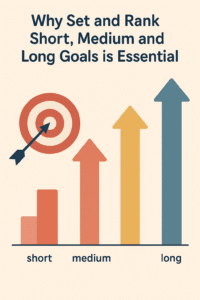
Effective goal setting isn’t about creating a giant, intimidating to-do list. It’s about building a nested structure of goals, where small, daily actions build up to weekly achievements, which in turn lead to monthly milestones, and ultimately, the realization of your grandest long-term visions. This is the “how” of turning a 10-year dream into what you need to do *today*.
Long-Term Goals: Your North Star (5-10+ Years)
These are the big, life-shaping ambitions. They define the person you want to become and the life you want to live. They are the “what” and the “why.” Long-term goals are often broad, but they should be deeply inspiring to you.
Examples of Long-Term Goals:
- Career: Become a Vice President at your company or start your own successful business.
- Financial: Achieve financial independence with a net worth of $2 million.
- Personal: Run a marathon, become fluent in Spanish, or build your dream home.
Medium-Term Goals: Your Milestones (1-3 Years)
Long-term goals are too big to tackle directly. Medium-term goals are the critical milestones you need to hit along the way. They break down the giant vision into more manageable, multi-year projects. They are the “major steps” on your roadmap.
Let’s break down the long-term goal: “Become a Vice President.”
- Medium-Term Goal 1: Obtain an MBA or a relevant professional certification (e.g., PMP) within 3 years.
- Medium-Term Goal 2: Successfully lead a major cross-departmental project within 2 years.
- Medium-Term Goal 3: Build a strong network of senior leaders and mentors within the next 18 months.
Short-Term Goals: Your Action Steps (Daily, Weekly, Monthly)
This is where the magic happens. Short-term goals are the tangible, measurable actions you take every single day and week that build momentum. They are the answer to the question, “What can I do *right now* to move closer to my vision?” This is where you create an effective list of tasks to accomplish a goal.
Let’s break down the medium-term goal: “Obtain an MBA.”
- Short-Term Goal 1 (This Quarter): Research and shortlist 5 suitable MBA programs.
- Short-Term Goal 2 (This Month): Study for and schedule the GMAT exam.
- Short-Term Goal 3 (This Week): Dedicate 5 hours to studying GMAT quantitative reasoning.
- Short-Term Goal 4 (Today): Complete one practice GMAT test section.
Do you see the power in this? The intimidating 10-year goal of becoming a VP has been broken down into a concrete, 1-hour task you can do today. This is how you eat an elephant: one bite at a time.

The Foundational Text on Personal Effectiveness
“The 7 Habits of Highly Effective People” by Stephen R. Covey is a timeless masterpiece. Habit 2, “Begin with the End in Mind,” is the philosophical core of goal setting. This book provides a principle-centered framework for building a life of purpose and achieving your most important long-term goals.
View on AmazonPart 3: The Art of Ranking – Prioritizing What Truly Matters
Once you have a list of goals, you’ll quickly realize you can’t do everything at once. The ability to prioritize—to rank your goals and tasks in order of importance—is what separates the busy from the effective. Busyness is doing a lot of things. Effectiveness is doing the *right* things.
The Eisenhower Matrix: A Tool for Clarity
Developed by President Dwight D. Eisenhower, this simple matrix helps you categorize your tasks based on two criteria: urgency and importance.
[Image of the Eisenhower Matrix]- Quadrant 1: Urgent & Important (Do First): Crises, pressing deadlines, problems. Manage these immediately.
- Quadrant 2: Not Urgent & Important (Schedule): This is the magic quadrant. It includes relationship building, long-term planning, and proactive work. This is where your most important goals live. You must schedule time for these activities, or they will be pushed aside by the urgent.
- Quadrant 3: Urgent & Not Important (Delegate): Interruptions, some meetings, many emails. These tasks feel important because they are time-sensitive, but they don’t contribute to your long-term goals. Delegate or minimize them.
- Quadrant 4: Not Urgent & Not Important (Eliminate): Time-wasting activities, trivial tasks, distractions. Be ruthless about eliminating these.
By filtering your daily tasks through this matrix, you ensure you are consistently making time for the “Important but Not Urgent” activities that drive your long-term success.
Part 4: The S.M.A.R.T. Framework – Making Your Goals Bulletproof
A vague goal is just a wish. “I want to get in shape” is a wish. To turn it into a goal, it needs structure. The S.M.A.R.T. framework is the gold standard for creating clear, actionable, and trackable goals.
- Specific: What exactly do you want to achieve? Who is involved? Where will it happen? Be precise.
- Measurable: How will you know when you’ve succeeded? What metrics will you track?
- Achievable: Is the goal realistic given your current resources and constraints? It should be a stretch, but not impossible.
- Relevant: Does this goal truly matter to you? Does it align with your long-term vision and values?
- Time-bound: What is the deadline? Setting a target date creates urgency and prevents procrastination.
Let’s Transform a Vague Wish into a S.M.A.R.T. Goal:
Vague Wish: “I want to grow my online business.”
S.M.A.R.T. Goal:
- Specific: I will increase online sales for my handmade jewelry business by implementing a targeted social media marketing campaign.
- Measurable: I will increase monthly revenue from $2,000 to $3,500, a 75% increase.
- Achievable: I have allocated a budget for ads and have the time to create new content, making this a challenging but achievable stretch.
- Relevant: This goal is highly relevant as it directly contributes to my long-term vision of making my business my full-time career.
- Time-bound: I will achieve this revenue target by the end of the next fiscal quarter (in 3 months).
This S.M.A.R.T. goal is a world away from the initial wish. It’s a clear, actionable plan.
Part 5: Goals in the Real World – Business and Personal Applications
This framework isn’t just an abstract exercise; it’s a practical tool for real-world success.
In Business
Every successful business runs on a tiered system of goals (often called Objectives and Key Results – OKRs). The long-term goal might be to capture 20% of the market share. This is broken down into medium-term goals, like launching three new products. That, in turn, is broken down into short-term goals for different departments. The marketing team, for instance, must have clear goals. They need to understand what types of marketing are there to choose the right strategies to attract the target consumer. They also need to set goals around brand perception and how to do online reputation management to ensure long-term brand health.
In Your Personal Life
The same structure applies to your personal finances, career, and health. A long-term goal of a comfortable retirement is built on medium-term goals of maxing out your 401(k) for five consecutive years, which is achieved through the short-term goal of automating your contributions every single month. Each layer supports the one above it, creating a powerful and stable structure for achievement.
Conclusion: Go from Drifter to Navigator
The difference between the person you are today and the person you want to be in five years is the goals you set and the systems you build to achieve them. Setting and ranking short, medium, and long-term goals is not a mere “productivity hack.” It is the fundamental operating system for a life of purpose, intention, and achievement. It’s how you stop being the ship adrift at sea and become the master navigator of your own destiny.
Your journey starts now. Don’t wait for the new year or for Monday. Take out a piece of paper or open a new document and perform one simple task: Write down one exciting, inspiring long-term goal. Then, break it down. What’s one medium-term milestone? And what is one small, 30-minute action you can take *today* to move toward it? Do that, and you’ve already started sailing.
Frequently Asked Questions About Goal Setting
What is the difference between a goal and a dream?
A dream is a passive desire or wish. A goal is an active pursuit. The primary difference is structure and intention. A goal is made concrete through frameworks like S.M.A.R.T., has a plan of action, and is measured. A dream is simply a pleasant thought without a plan.
How many goals should I have at one time?
It’s best to focus on 1-3 major long-term goals at a time across different life areas (e.g., one career, one financial, one personal). For each of those, you might have a few supporting medium-term goals. The key is to avoid overwhelming yourself. Focus is more powerful than quantity.
How often should I review my goals?
Review your short-term (weekly/monthly) goals every week to track progress and plan your upcoming tasks. Review your medium-term goals quarterly to ensure your short-term actions are still aligned. Review your long-term goals annually to make sure they still resonate with your values and life circumstances.
What if I fail to achieve a goal?
Failing to achieve a goal is not a failure of character; it’s a data point. The goal may have been unrealistic (re-evaluate the ‘A’ in S.M.A.R.T.), the timeline too aggressive (re-evaluate the ‘T’), or your strategy may have been flawed. Analyze what went wrong, learn from the experience, and set a new, smarter goal. Persistence is key.